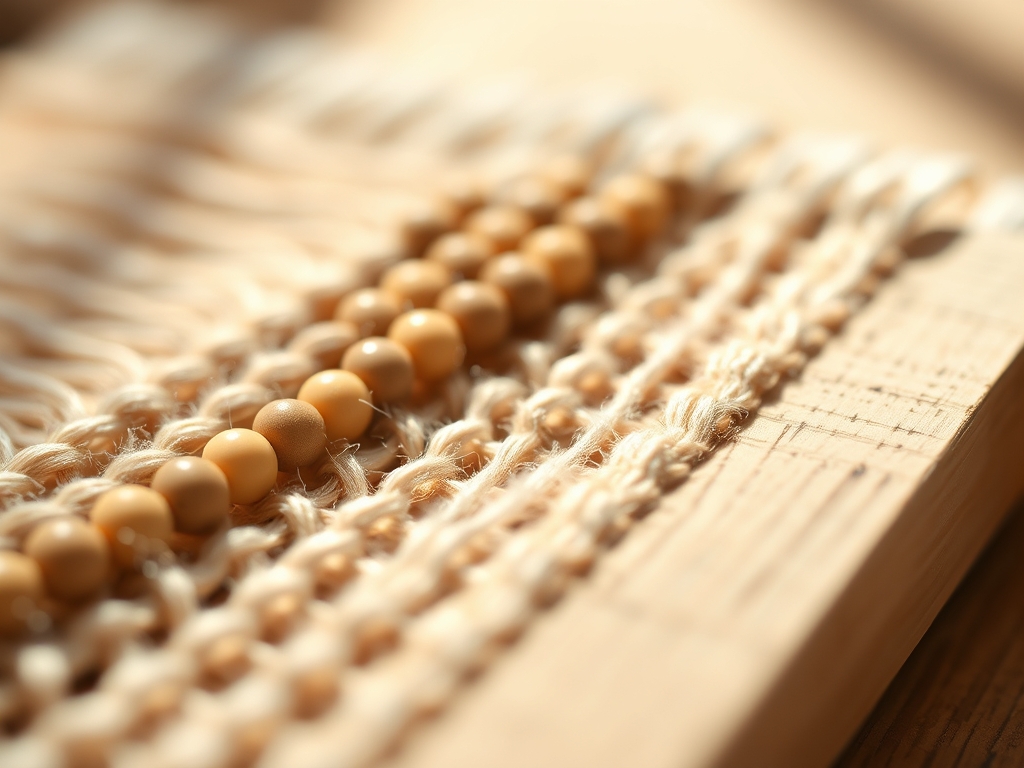
Imagine the sharp, rhythmic click of glass on wood as you spill a fresh vial of Miyuki Delicas onto your velvet tray. There is a specific, high-frequency resonance that high-quality glass beads emit; it is the sound of precision engineering meeting ancient artistry. When you begin the journey of simple bead weaving, you are not just making jewelry. You are managing the structural integrity of a micro-lattice. You feel the cool, non-porous surface of the beads against your fingertips, contrasting with the organic, fibrous pull of the warp thread stretched across your loom. The tension must be perfect. If the warp is too loose, your pattern will sag and lose its geometric crispness; if it is too tight, the thread may reach its elastic limit and snap, sending hours of work skittering across the floor. We are looking for that sweet spot of tensile strength where the beads sit shoulder-to-shoulder in a flawless, shimmering grid.
THE STUDIO KIT
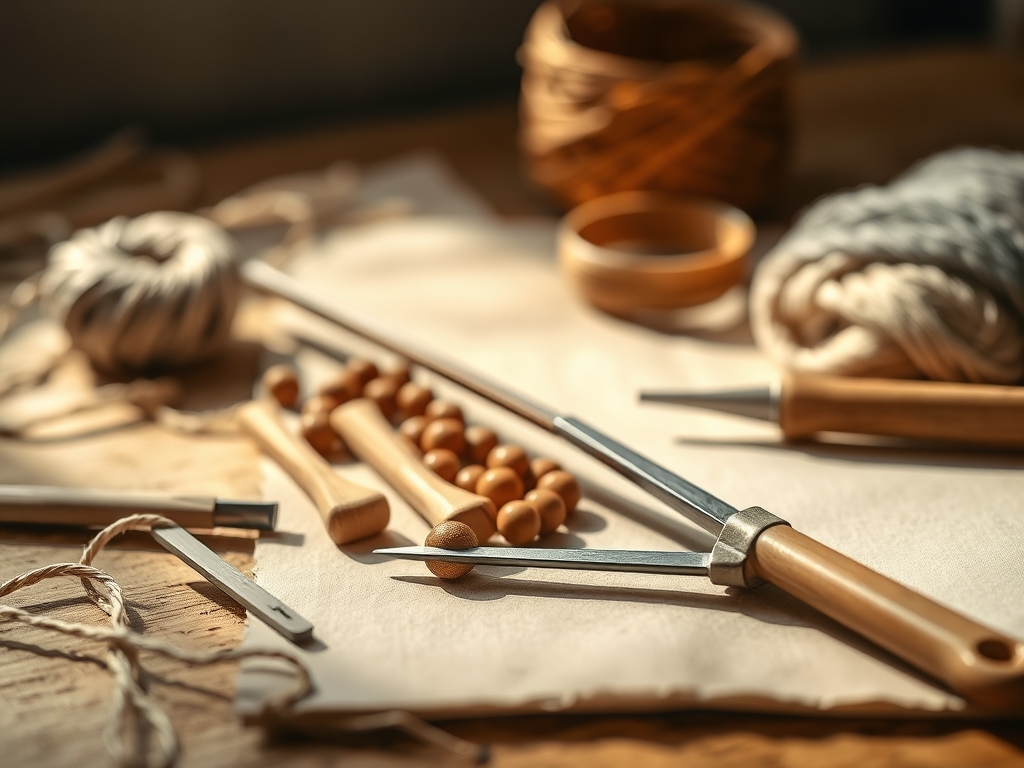
To master simple bead weaving, your toolkit must prioritize consistency and ergonomic efficiency. You will need a sturdy metal or hardwood loom, a size 10 or 12 beading needle (which is significantly thinner and more flexible than a standard sewing needle), and high-tenacity polyethylene thread like FireLine. Unlike cotton, this synthetic thread has a high denier count and zero stretch, ensuring your patterns remain dimensionally stable over time. You will also need a pair of fine-tipped jeweler's snips or a thread burner to prevent fraying at the molecular level.
For material substitutions, if you cannot find specialized beading thread, a high-quality 100 percent nylon upholstery thread will suffice, though it requires pre-stretching to avoid future warping. If you lack a professional loom, a sturdy cardboard box with notches cut at precise 2-millimeter intervals can act as a temporary jig. However, a professional loom allows for adjustable tension via wing nuts, which is vital for maintaining a consistent gauge across longer pieces.
THE TEMPO
The "Maker's Rhythm" is a state of flow where your hands move faster than your conscious thought. For a standard 7-inch bracelet, expect the following time investment. The Calibration Phase (warping the loom and sorting your palette) takes roughly 20 minutes. This is the most critical stage; a single misaligned warp thread will haunt the entire project. The Execution Phase (the actual weaving) typically moves at a rate of 10 to 15 rows per hour, depending on the complexity of your color shifts. Finally, the Finishing Phase (weaving in ends and attaching hardware) requires about 30 minutes of focused, high-precision work. Total project time sits comfortably between three to five hours.
THE CORE METHOD
1. Warping the Lattice
Secure your thread to the anchor bolt and wind it across the loom springs. Ensure each thread sits in a dedicated groove to maintain perfect parallel alignment.
Mastery Tip: This step relies on Uniform Tension Distribution. If one thread is tighter than the others, the finished beadwork will curl toward the high-tension side once removed from the frame. Use your fingers to "pluck" the threads like a harp; they should all emit the same pitch.
2. Loading the Weft
Thread your needle with approximately five feet of thread and tie it to the leftmost warp thread. Pick up the first row of beads according to your pattern.
Mastery Tip: Understand Capillary Action. When you coat your thread in beeswax or synthetic conditioner, you reduce the friction coefficient. This allows the needle to glide through the beads without snagging the internal glass walls, which can sometimes have microscopic burrs.
3. The Under-Pass
Bring the needle and beads underneath the warp threads. Use your index finger to push the beads upward, forcing each individual bead into the space between two warp threads.
Mastery Tip: This is about Structural Equilibrium. By pushing the beads up from below, you are creating a temporary friction fit that holds the beads in place while your dominant hand prepares the return pass.
4. The Lock-Stitch
Pass the needle back through the beads from right to left, ensuring the needle stays above the warp threads. This traps the warp between two layers of weft thread.
Mastery Tip: Observe the Mechanical Interlock. If your needle accidentally passes below a warp thread during this return trip, that bead will not be secured and will eventually fall out of alignment. Accuracy here is the difference between a professional finish and a structural failure.
5. Transitioning Patterns
When changing colors for your seven patterns (like the "Chevron Shift" or "Ombre Fade"), always double-check your count before the lock-stitch.
Mastery Tip: Use a Digital Caliper to occasionally check the width of your work. Even slight variations in bead manufacturing can cause the width to drift. Consistent pressure during the lock-stitch ensures the beads compress evenly.
6. Managing Thread Ends
When you run out of thread, weave the tail back through several previous rows in a zigzag motion before cutting.
Mastery Tip: This utilizes Friction Anchoring. By changing direction multiple times, you create enough surface area contact between the threads that the tail cannot pull out, even under significant kinetic stress during wear.
7. The Final Burnish
Once the piece is removed from the loom, use a bone folder or a smooth metal tool to gently press the rows into a final, flat alignment.
Mastery Tip: This process, known as Planishing, settles the threads into the bead holes and relieves any residual internal stress from the weaving process, resulting in a more fluid "drape" against the skin.
THE TECHNICAL LEDGER
Maintenance & Longevity: Glass beads are chemically stable, but the threads are susceptible to UV degradation and abrasion. Store your finished pieces in a dark, pH-neutral environment. Avoid contact with perfumes, as the alcohol can break down the synthetic coatings on "galvanized" or "duracoat" beads.
Material Variations: For a sustainable approach, look for recycled glass beads from fair-trade sources in Ghana. For a premium finish, use 24kt gold-plated Delicas, which offer superior oxidation resistance compared to standard metallic finishes.
The Correction:
- The Hourglass Effect: If your piece gets narrower in the middle, you are pulling the weft too tight. Fix this by inserting a spacer or loosening your grip.
- The Thread Loop: If a loop of thread is visible on the edge, you missed a bead during the return pass. You must unthread back to that point; there is no shortcut.
- The Cracked Bead: If a bead breaks mid-weave, use a pair of thin-nosed pliers to carefully crush the remaining glass and weave a new bead into the gap using a separate needle.
Studio Organization: Store your beads in clear, stackable acrylic containers organized by the Munsell Color System. This allows for faster visual processing during the design phase. Keep your loom in a padded case to prevent the tension springs from becoming bent or contaminated with dust.
THE FINAL REVEAL
There is nothing quite like the moment you unclip your work from the loom and feel it collapse from a rigid structure into a supple, fabric-like ribbon of light. The seven patterns you have mastered; from the sharp geometric "Diamond Grid" to the soft "Pastel Gradient"; represent a triumph of physics and patience. The weight of the glass is substantial yet comforting, a tactile reminder of the thousands of tiny intersections you just successfully engineered. Your simple bead weaving project is no longer just a collection of parts; it is a high-density masterpiece ready to catch the light.
STUDIO QUESTIONS
How do I choose the right needle size?
Match your needle to the bead's internal diameter. A size 12 needle is standard for 11/0 Delicas, allowing multiple passes without stressing the glass walls or causing the bead to shatter under pressure.
Why is my beadwork curving?
Curving usually results from uneven warp tension. If one side of your loom is tighter than the other, the piece will pull toward the tension. Ensure all warp threads are equally taut before starting your first row.
Can I use regular sewing thread?
Standard sewing thread lacks the necessary tensile strength and abrasion resistance. It will likely fray against the glass edges. Stick to specialized bonded nylon or polyethylene threads for structural integrity and a professional finish.
How do I fix a mistake five rows back?
Unfortunately, bead weaving is a linear process. You must carefully unweave each row to reach the error. Using a sharp awl can help you loosen the stitches without piercing the thread fibers.