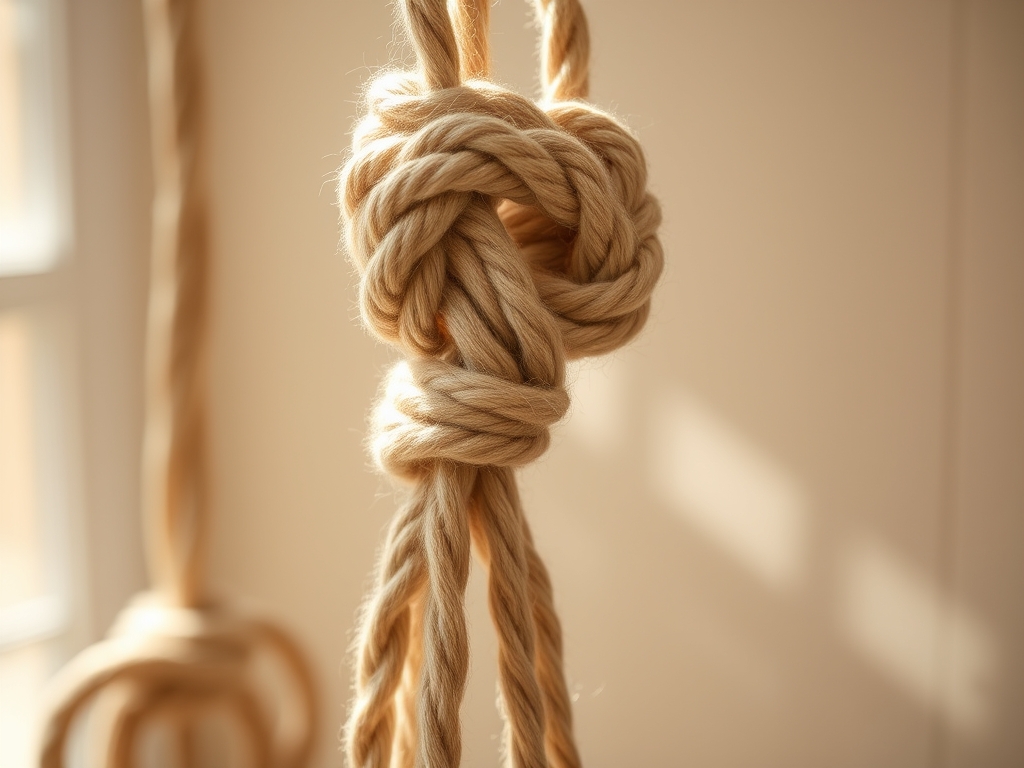
Imagine the smell of raw, unbleached cotton and the satisfying weight of a heavy spool resting in your palm. There is a specific, tactile thrill in feeling the twist of a cord between your thumb and forefinger; you can almost sense the potential energy stored in those fibers. When you dive into the world of beginner macrame knots, you are not just tying string. You are engaging in a complex dance of friction and tension. The way a cord yields or resists determines the structural integrity of your entire wall hanging. If the fiber density is too low, your knots will look starved and skeletal. If the ply is too tight, the piece will feel rigid and clinical. We are looking for that perfect, buttery equilibrium where the cotton is soft enough to be ergonomic for your hands but strong enough to maintain a crisp, geometric silhouette under the constant pull of gravity.
THE STUDIO KIT
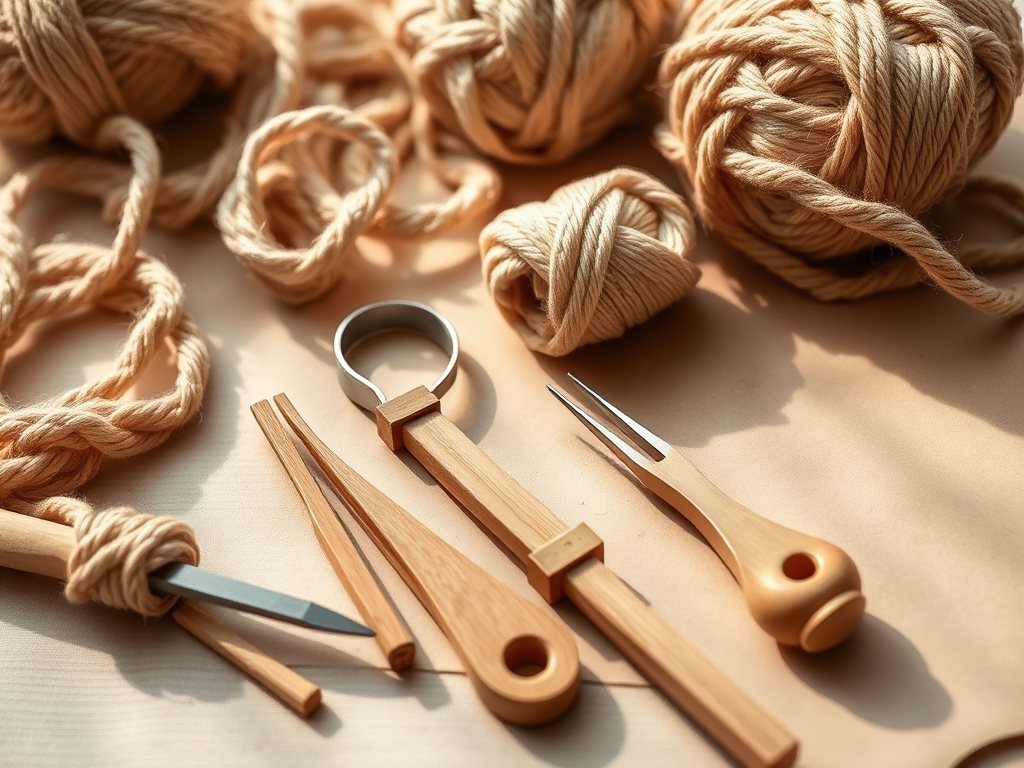
Before we start looping, we need to talk about the hardware that makes the magic happen. You cannot rely on kitchen scissors here; you need a high carbon steel rotary cutter or professional fabric shears to ensure a clean, perpendicular cut across the grain. A frayed end is a nightmare for threading through tight spaces. You should also keep a jeweler's saw or a small hand saw nearby if you are using natural driftwood dowels, as you will want to customize the length to match the scale of your piece. To measure your cordage with precision, skip the floppy plastic tape and use a set of calipers or a steel ruler to check the gauge of your rope. Consistency in diameter is the secret to symmetrical patterns.
For material substitutions, if you cannot find high quality cotton, look for recycled polyester or hemp. However, be warned that hemp has a high lignin content, making it scratchy and prone to shedding. If you choose a synthetic substitute, you may need a heat tool to sear the ends and prevent unravelling. Always have a bone folder or a smooth wooden awl on standby. These tools are essential for tightening internal loops or tucking in stray fibers without damaging the delicate surface tension of the rope.
THE TEMPO
The "Maker's Rhythm" is a real psychological state where your heart rate synchronizes with the repetitive motion of the cord. For a standard plant hanger, expect a three phase timeline. Phase one is the Preparation Phase, which takes about thirty minutes. This involves measuring, cutting, and securing your anchor points. Do not rush this; an error in length at the start results in a catastrophic shortage at the end. Phase two is the Execution Phase, lasting two to four hours depending on your speed. This is where the tensile strength of your cord is tested as you build the body of the piece. Finally, phase three is the Finishing Phase, a thirty minute window for trimming, brushing out fringes, and steam blocking. By respecting this tempo, you avoid the hand fatigue that comes from over exertion.
THE CORE METHOD
1. The Foundation Lark's Head
This is the gateway to all beginner macrame knots. Fold your cord in half and loop it over your dowel, pulling the ends through the center. You must ensure the bight of the rope is snug against the wood.
Mastery Tip: This knot relies on frictional resistance. If the dowel is too smooth, the knot will slide. Use a bit of sandpaper to lightly scuff the wood surface, increasing the coefficient of friction to keep your foundation stable.
2. The Structural Square Knot
The square knot is the backbone of the craft. It requires four strands: two stationary filler cords and two working cords. You cross the left over the center, then the right over the left and under the center.
Mastery Tip: Pay attention to cord compression. If you pull the working cords too tight, you will crush the filler cords, causing the piece to pucker. Maintain a consistent torque on every knot to ensure a flat, professional finish.
3. The Spiral Half Knot
By repeating only the first half of a square knot, the rope naturally begins to twist. This creates a DNA like helix that adds incredible visual depth to any hanger.
Mastery Tip: This occurs because of unidirectional tension. As the fibers overlap on one side, they create a torque imbalance that forces the cord to rotate. Do not fight the twist; let the rope find its natural equilibrium point.
4. The Double Half Hitch
This is the most versatile knot for creating diagonal lines and borders. It involves wrapping one cord twice around a stationary "lead" cord.
Mastery Tip: The lead cord dictates the vector of your design. Keep the lead cord at a precise forty five degree angle. If your lead cord sags, the capillary action of the fibers will cause the entire row to look uneven once the piece is hung.
5. The Gathering Knot
This is used to secure the bottom of a plant hanger. You take a separate piece of cord and wrap it tightly around the bundle, tucking the ends inside the wrap.
Mastery Tip: This knot utilizes radial compression. By layering the wraps vertically, you distribute the weight of the plant across a larger surface area, preventing any single fiber from reaching its breaking point.
6. The Overhand Safety Knot
A simple but vital knot used at the very tips of your fringe to prevent the ply from untwisting prematurely.
Mastery Tip: This serves as a mechanical stop. By increasing the bulk density at the end of the strand, you ensure that the internal friction of the twist remains locked in place until you are ready to brush it out.
THE TECHNICAL LEDGER
Maintenance & Longevity: Cotton is a porous organic material. To prevent yellowing or degradation from UV exposure, treat your finished piece with a light fabric protector. Avoid hanging macrame in high humidity areas like bathrooms unless you are using synthetic cords, as natural fibers will absorb moisture and lose their structural integrity.
Material Variations:
- Single Strand: Best for soft, brushed out fringes; very low twist.
- Three Ply Twisted: The gold standard for beginners; high tensile strength and easy to undo.
- Braided Cord: Zero stretch; excellent for heavy potted plants but impossible to fringe.
The Correction:
- The Gap: If you see daylight between knots, your tension is inconsistent. Use your awl to manually shift the loops upward.
- The Twist: If your square knots are bowing, you have likely switched your starting side. Always start with the same "lead" hand.
- The Shortfall: If one cord is running short, "splice" in a new piece by hiding the junction inside a bulky knot.
Studio Organization: Store your spools horizontally on a dowel rack. Vertical stacking can cause the bottom spools to compress, altering the gauge of the rope and making your measurements inaccurate. Keep your cords in a dark, climate controlled environment to prevent the natural oils from drying out.
THE FINAL REVEAL
Look at that! You have successfully navigated the physics of fiber. Your finished piece should have a rhythmic, balanced appearance with crisp lines and a satisfying weight. Notice how the light catches the texture of the knots; that is the result of your consistent tension and careful material selection. You didn't just tie strings together; you engineered a textile structure that is both beautiful and functional. Shake out that fringe, give it a final trim with your rotary cutter, and hang it with pride. You are officially a maker.
STUDIO QUESTIONS
What is the best rope for beginner macrame knots?
A 3 ply twisted cotton rope in 4mm or 5mm is ideal. It offers high tensile strength and enough friction to hold knots in place while being forgiving enough to untie if you make a mistake.
How do I calculate cord length?
Generally, multiply the desired length of your project by four. If you are using many complex, bulky knots, multiply by six. Always add an extra foot for the final fringe to account for trimming loss.
Why is my macrame hanging crooked?
This usually stems from uneven tension or a tilted anchor dowel. Use a spirit level to ensure your dowel is horizontal and check that your Lark's Head knots are tightened with equal force across the bar.
Can I wash my macrame plant hanger?
Hand washing in cold water is possible for cotton, but it may cause the fibers to shrink or the ply to loosen. It is better to spot clean or use a vacuum attachment to remove dust.
What tools are essential for a clean fringe?
A fine tooth comb or a pet slicker brush is necessary to separate the fibers. Once brushed, use a rotary cutter and a self healing mat to achieve a perfectly straight, professional edge.