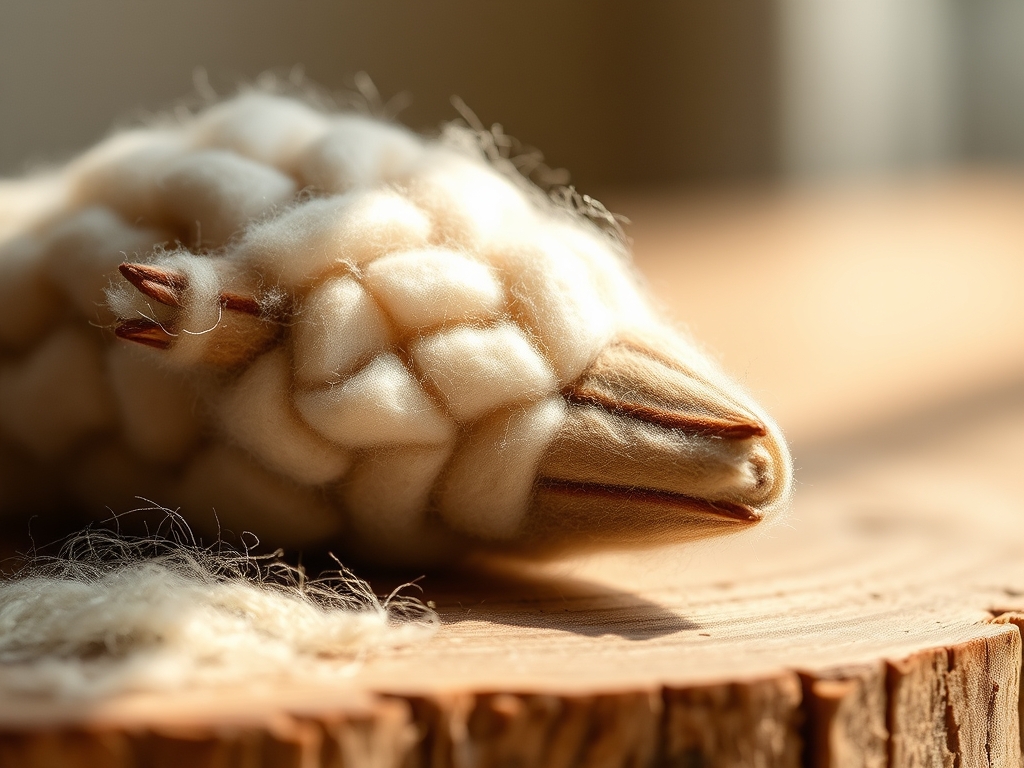
Grab your favorite mug and clear some space on the workbench because we are about to dive into the most satisfyingly tactile hobby on the planet. If you have ever run your fingers over a bundle of raw wool and felt that crimped, springy resistance, you are already halfway to being obsessed. This guide is your ultimate Intro to Needle Felting; it is the science of turning chaotic, fluffy clouds of protein fibers into structural masterpieces. We are not just poking wool with needles here. We are engaging in a high speed mechanical interlocking process that exploits the microscopic scales found on animal hair. Think of it like microscopic Velcro that you control with every jab. We are going to master nine fundamental soft shapes that form the anatomical building blocks for every animal you will ever want to create. From the perfect sphere of a bunny head to the tapered cone of a fox snout, we are engineering with fiber.
THE STUDIO KIT
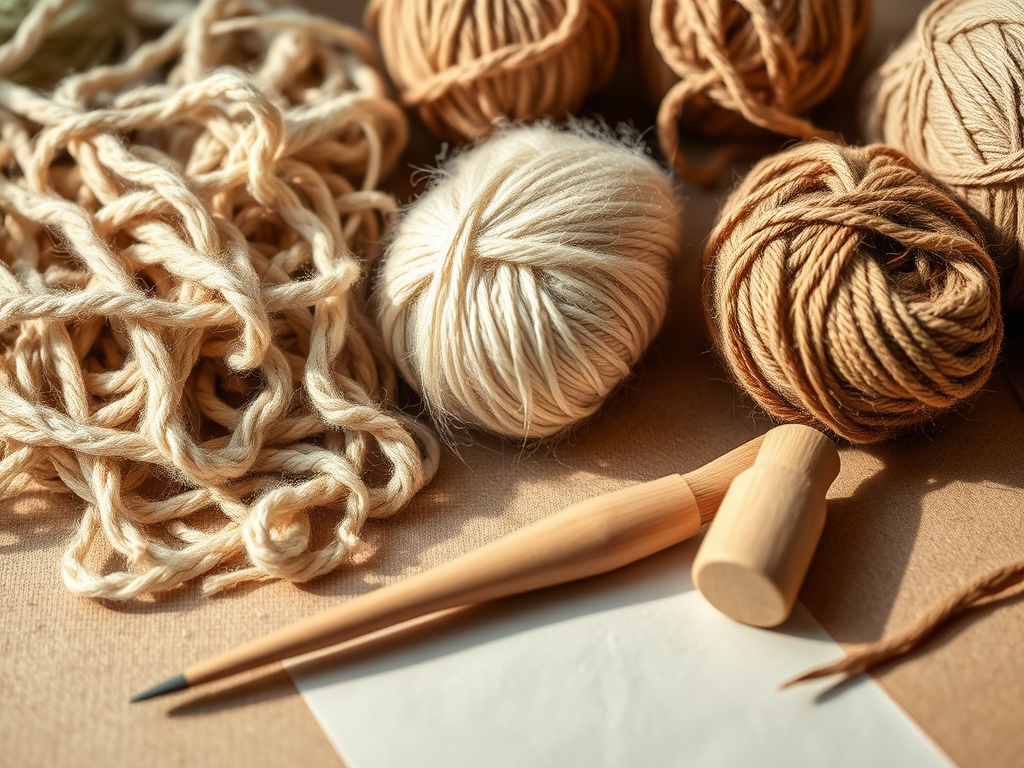
To begin your journey into the Intro to Needle Felting, you need to understand your hardware. Your primary tool is the felting needle, which is not a traditional sewing needle but a high carbon steel shaft featuring triangular or star shaped notches called barbs. These barbs are engineered to catch individual fibers and push them into the core of the mass, increasing the fiber density with every strike. You will want a range of gauges; a 36 gauge needle is your heavy lifter for bulk shaping, while a 40 or 42 gauge needle is a precision instrument for surface finishing and fine detail.
Your material is wool roving or batting. Roving has been combed so the fibers run in a single direction, providing high tensile strength along the length, whereas batting is a jumbled mess of fibers perfect for quick bulking. For the base of your shapes, use Core Wool, which is a more affordable, high crimp wool that felts rapidly. For the "skin," you will use merino or corriedale for that buttery smooth finish.
Material Substitutions: If you cannot find high density foam for your work surface, a burlap sack filled with rice offers a stable, porous base that protects your needles from snapping against hard surfaces. If you lack a professional multi-needle tool, you can bundle three needles together with a rubber band to increase your surface area efficiency, though you must maintain perfect vertical alignment to avoid lateral stress fractures in the steel.
THE TEMPO
The "Maker's Rhythm" is a physiological state where your hand-eye coordination syncs with the resistance of the wool. For a beginner, expect to spend about 15 to 20 minutes on each of the nine basic shapes. The bulk phase is fast and aggressive; you are looking to collapse the air pockets within the wool as quickly as possible. This transitions into the refinement phase, which is slower and more methodical. You will spend roughly 60 percent of your time on the final 10 percent of the shape's surface. True mastery comes when you can hear the change in the wool; a soft "crunch" means you have low density, while a sharp "tink" indicates the fibers are reaching maximum compaction.
THE CORE METHOD
1. THE SPHERE (The Universal Head)
Start by folding a strip of core wool into a tight cylinder, then tuck the ends in to create a rough ball. Use your 36 gauge needle to poke deeply into the center from all angles.
Mastery Tip: This relies on radial compression. By working from the outside toward the geometric center, you create a dense core that supports the outer layers. If the center remains soft, the shape will eventually sag under its own weight.
2. THE OVAL (The Torso)
Roll your wool into a longer, pill shaped form. Focus your needle strikes on the "equator" of the shape while rotating it constantly to maintain symmetry.
Mastery Tip: To ensure structural integrity, use a caliper to check that your diameters are consistent. An oval requires a balance of longitudinal and latitudinal felted paths to prevent the wool from "springing" back into a circle.
3. THE CONE (The Snout)
Create a sphere but concentrate your strikes on one specific pole. As you poke, pull the wool slightly to encourage the fibers to migrate toward a point.
Mastery Tip: This is a lesson in fiber migration. Wool fibers will always move in the direction of the needle strike. By angling your needle toward the tip, you are physically transporting the mass to create a taper.
4. THE FLAT DISK (The Ear)
Lay a small tuft of wool on your mat and poke it into a circle. Flip it frequently to prevent it from fusing to your foam pad.
Mastery Tip: Use a bone folder or your fingernail to "burnish" the edges. This flattens the stray fibers and creates a crisp, professional perimeter by increasing the surface tension of the felted mat.
5. THE CYLINDER (The Leg)
Roll a strip of wool tightly around an awl or a thin dowel, then felt the surface while it is still on the tool. Slide it off and finish the ends.
Mastery Tip: The internal void created by the tool allows you to felt against a hard internal surface, which results in a much higher ply density and a more rigid structural limb.
6. THE TEARDROP (The Tail or Wing)
Start with an oval but concentrate your felting on one end until it becomes a sharp point, leaving the other end fluffy and un-felted.
Mastery Tip: Leaving one end un-felted is a technical requirement for seamless joining. Those loose fibers act as an anchor that you will eventually "graft" into the main body of your animal.
7. THE CUBE (The Structural Base)
Felt a sphere, then repeatedly strike one side against your flat foam mat to create a "facet." Rotate 90 degrees and repeat until six sides are formed.
Mastery Tip: This process uses planar compaction. By hitting a flat surface, you are forcing the fibers to align along a 2D plane, which is essential for creating stable, standing figures.
8. THE TRIANGLE (The Feline Ear)
Similar to the disk, but use your fingers to pinch the wool into a three sided shape as you work.
Mastery Tip: Accuracy here requires a steady gauge. If you poke too deeply in one spot, you will create a "dimple" that ruins the geometric silhouette. Keep your strikes shallow and frequent.
9. THE CUP (The Nest or Shell)
Felt a thick disk, then use a heavy gauge needle to aggressively strike only the center until it indents and the edges curl upward.
Mastery Tip: This utilizes differential shrinkage. By over-felting the center, you are causing that area to contract, which naturally pulls the less dense edges into a concave curve.
THE TECHNICAL LEDGER
Maintenance & Longevity: To keep your creations pristine, avoid over-handling, as skin oils can degrade the lanolin remaining in the wool. If the piece becomes fuzzy, use a pair of fine embroidery scissors or a rotary cutter to shave the surface "halo."
Material Variations:
- Sustainable: Use undyed, local wool to reduce the carbon footprint of chemical dyes.
- Premium: Silk blends can be added to the surface for a high luster, reflective finish.
- Recycled: Old wool sweaters can be unraveled and "carded" to create unique, variegated core material.
The Correction:
- Over-felting: If a shape becomes too hard and small, you cannot "undo" it. You must wrap fresh wool over the exterior and start the refinement process again.
- Needle Breakage: This usually happens due to lateral torque. Always pull the needle out at the exact same angle it went in.
- Lumpy Surface: This is caused by shallow poking. Use a finer gauge needle and poke deeper to pull those surface lumps into the core.
Studio Organization: Store your wool in airtight, clear bins to prevent moth infestation and dust accumulation. Organize by micron count (fiber fineness) rather than just color to ensure you always grab the right structural tool for the job.
THE FINAL REVEAL
Look at that! You have just transitioned from a fiber enthusiast to a structural engineer of the soft world. By mastering these nine shapes, you have the "DNA" for any creature in the animal kingdom. Your spheres are dense; your edges are crisp; and your surfaces are smooth enough to catch the light. This Intro to Needle Felting is just the beginning of your tactile journey. The transition from raw fluff to a solid, weighted object in your hand is a magic trick that never gets old. Now, go forth and turn those shapes into something breathing with life!
STUDIO QUESTIONS
How do I know when my shape is finished?
Your shape is complete when it no longer feels "squishy" and resists compression when squeezed between your thumb and forefinger. The surface should be smooth with no visible "pockmarks" from the needle, indicating maximum fiber interlocking and density.
Why does my wool keep sticking to the foam mat?
This happens because the needle barbs are pushing fibers through the wool and into the foam. To prevent this, flip your work frequently and use a "light touch" during the initial shaping phases to avoid deep mechanical bonding with the mat.
Can I use any type of wool for needle felting?
While most animal fibers work, short staple wools with high crimp (like Corriedale) are best for beginners. Very long, silky fibers like Mohair have low friction and are difficult to felt into tight, structural shapes without an internal wire armature.
What should I do if I keep pricking my fingers?
First, ensure you are not holding the wool too closely to the strike zone. You can use leather finger guards to provide a protective barrier. Always maintain a vertical needle path and never look away from your work while the needle is in motion.