
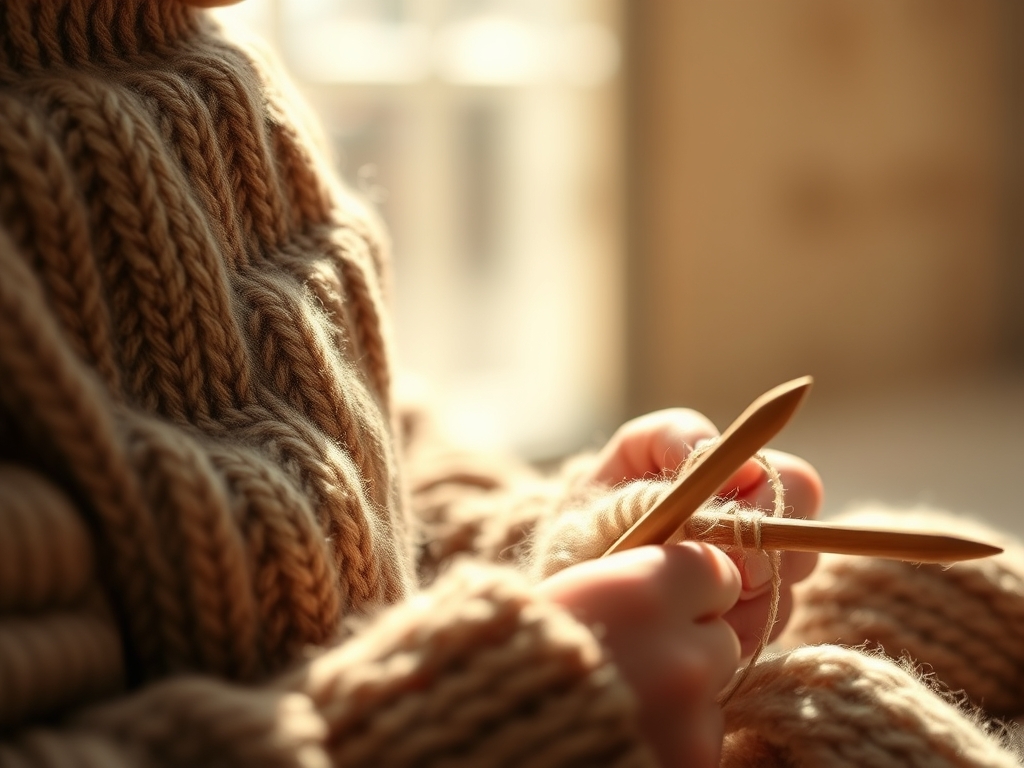
Imagine the scent of raw sheep wool hitting the air as you crack open a fresh skein; it is earthy, rich, and slightly lanolin-heavy. When you are Teaching Kids Knitting, the first thing they notice is the tactile friction of the fibers against their skin. We are not just making scarves; we are engineering soft-shell structures using interlocking loops that rely on the tensile strength of protein-based or synthetic polymers. It is a high-stakes game of tension control and fine motor coordination. You want your little maker to feel like a structural engineer of the textile world. By focusing on the physics of the loop rather than just the pattern, we transform a hobby into a masterclass of manual dexterity. The goal is to move from a chaotic tangle to a rhythmic, predictable grid of stitches. We are going to dive into the mechanics of gauge and the sheer joy of seeing a singular thread transform into a three-dimensional fabric through the magic of geometry and patience.
THE STUDIO KIT
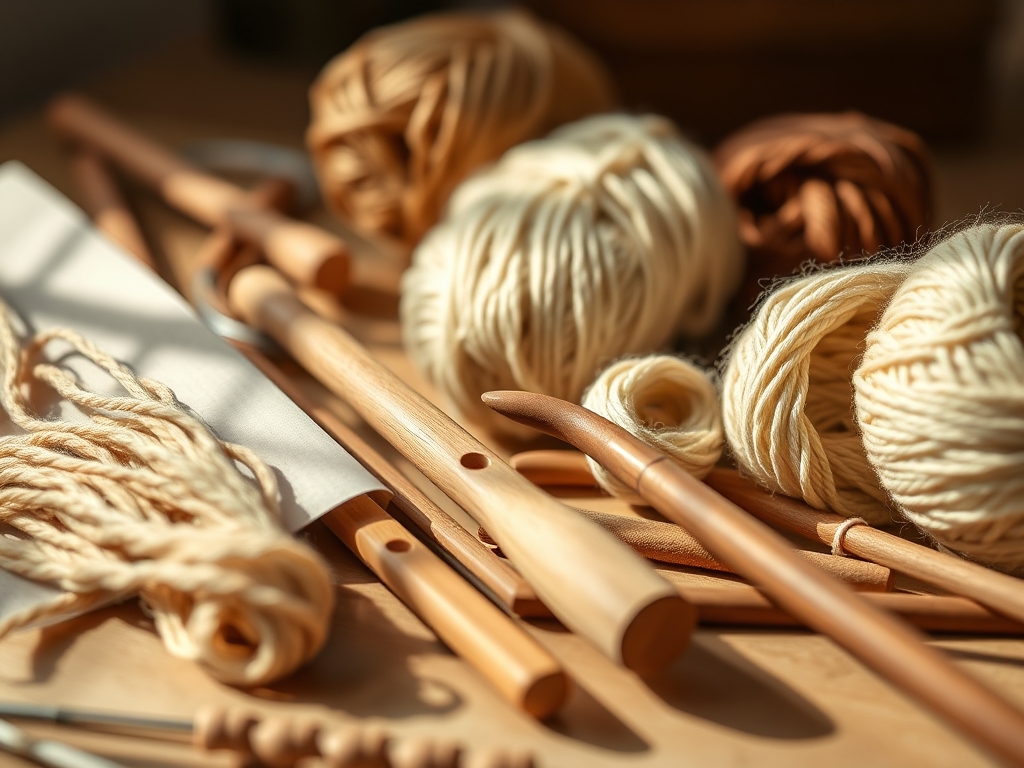
To begin our workshop, we need to curate a selection of tools that respect the ergonomic limitations of smaller hands while maintaining high performance. Forget those slippery plastic needles; we are looking for friction. Wood or bamboo needles offer a higher coefficient of friction, which prevents the stitches from sliding off prematurely. For the yarn, a bulky weight (Category 5 or 6) is essential. A high ply count ensures the yarn does not split when the child probes the stitch with the needle tip. You might even use a bone folder to help them crease their project notes or a set of calipers to measure the diameter of different needles to understand how tool size dictates the resulting porosity of the fabric.
Material Substitutions: If you cannot find high-quality wool, look for a cotton-acrylic blend. Pure cotton lacks the elastic recovery needed for beginners, often leading to hand fatigue. A blend provides the necessary "give" or stretch. If traditional needles are too intimidating, you can substitute them with oversized wooden dowels that you have sanded and tapered yourself using a fine-grit sandpaper to ensure a snag-free surface.
THE TEMPO
The "Maker's Rhythm" is a psychological state where the repetitive motion of the hands syncs with the brain's alpha waves. For a child, this tempo is initially erratic. Phase one, the Cast On, usually takes about thirty minutes of high-intensity focus. This is where the foundation of the structural integrity is laid. Phase two, the Knit Row, is the steady state. Expect a rate of about two stitches per minute initially. As they develop muscle memory, the hertz of their movements will stabilize. A standard "mug rug" project requires about four to six hours of cumulative work. We break this into twenty-minute "sprints" to prevent cognitive overload and maintain the integrity of the stitch tension.
THE CORE METHOD
1. The Finger Knitting Foundation
Before we introduce hardware, we use the fingers as the primary looms. This teaches the child the fundamental concept of the "over-under" mechanical path. By looping yarn around the four digits of the hand, they create a narrow, tubular knit.
Mastery Tip: This exercise demonstrates surface tension. If the child pulls the yarn too tight, the blood flow to the fingers is restricted; if too loose, the loops collapse. The goal is to find the "Goldilocks zone" of tension where the yarn rests flush against the skin without compressing the soft tissue.
2. The Giant Needle Approach
Using needles the size of small batons allows the child to see the interlooping architecture clearly. We use two different colors of needles (e.g., one red, one blue) so they can track the movement of the "working" needle versus the "stationary" needle.
Mastery Tip: This teaches spatial orientation. By observing the angle of the needle entry, the child learns how the bevel of the needle tip creates space within the yarn's twist, allowing for a seamless transition of the loop from one tool to the other.
3. The Loom Knitting Shortcut
A circular or rectangular loom removes the risk of dropped stitches. The child uses a small metal hook (similar to a dental pick or an awl) to lift the bottom loop over the top loop.
Mastery Tip: This method highlights the structural integrity of a stitch. Because the loom holds the diameter of each loop constant, the resulting fabric has a perfect gauge. It teaches the child that consistency in tool placement results in a uniform aesthetic.
4. The Storyboard Stitch
We assign a narrative to each movement: "In through the front door, around the back, out through the window, and off jumps Jack." This mnemonic device anchors the mechanical steps in the long-term memory.
Mastery Tip: This is a lesson in procedural sequencing. In engineering, the order of operations is vital. If the "yarn over" occurs at the wrong stage, the resulting hole (a yarn over) disrupts the tensile distribution of the fabric, potentially causing a structural failure or a "run" in the knit.
5. The Color Block Challenge
Once the basic knit stitch is mastered, we introduce a second color. This requires the child to perform a "join," which involves knotting or weaving in the new fiber.
Mastery Tip: This introduces the concept of material continuity. By overlapping the two different yarns, the child learns how friction and "fuzz" (the halo of the yarn) allow two separate strands to grip each other and function as a single unit.
THE TECHNICAL LEDGER
Maintenance & Longevity: Knitted items are susceptible to pilling and felting. To maintain the piece, teach the child to "shave" the surface using a specialized fabric comb. Never wash handmade knits in high-heat cycles, as the agitation and temperature cause the protein fibers to lock together permanently, a process known as irreversible entanglement.
Material Variations:
- Sustainable: Bamboo or Tencel fibers offer high luster and are biodegradable.
- Recycled: "T-shirt yarn" made from jersey remnants provides a massive denier for fast results.
- Premium: Merino wool offers superior thermal regulation and softness.
The Correction:
- The Accidental Increase: If the child has too many stitches, they likely wrapped the yarn over the needle. Fix: Identify the "bridge" and drop it.
- The Dropped Stitch: A loop has fallen out of the matrix. Fix: Use a crochet hook to "ladder" the stitch back up to the current row.
- The Tight Cast-On: The first row is too rigid to work into. Fix: Use a needle two sizes larger specifically for the setup row to increase the initial circumference.
Studio Organization: Store yarn in airtight, transparent bins to prevent UV degradation and pest infestation (moths). Use a rotary cutter and a self-healing mat for trimming ends to ensure a clean, perpendicular cut that prevents fraying.
THE FINAL REVEAL
Look at that! Your mini-maker has successfully manipulated a linear strand of fiber into a complex, interlocking grid. The finished piece is a testament to their developing proprioception and cognitive endurance. Whether it is a chunky headband or a simple coaster, the result is a functional artifact of physics. The edges are crisp, the tension is becoming more uniform, and the "V" shape of the stitches is perfectly aligned. They have moved beyond mere play; they have engaged in the ancient, technical art of textile fabrication.
STUDIO QUESTIONS
What is the best age to start Teaching Kids Knitting?
Most children develop the necessary fine motor precision and bilateral coordination by age five or six. If they can tie their shoes or use a pair of safety scissors, their hands are ready for the basic mechanics of yarn manipulation.
Why does my child keep losing stitches?
This usually occurs due to a lack of needle tip control. If the needles are held at an obtuse angle, the yarn loses its grip on the taper. Encourage them to keep the needles parallel to maintain constant contact with the loops.
Should I use metal or wooden needles for a beginner?
Choose wood or bamboo. Metal has a low surface energy, meaning it is very slippery. Beginners need the natural "grip" of wood to prevent the yarn from sliding off, which reduces frustration and helps maintain a consistent stitch gauge.
How do I fix a hole in the middle of the knitting?
Holes are typically caused by an accidental "yarn over." To fix it, you must un-knit (or "tink") back to the error. This teaches the child about reversible processes and the importance of tracking every single loop in the sequence.