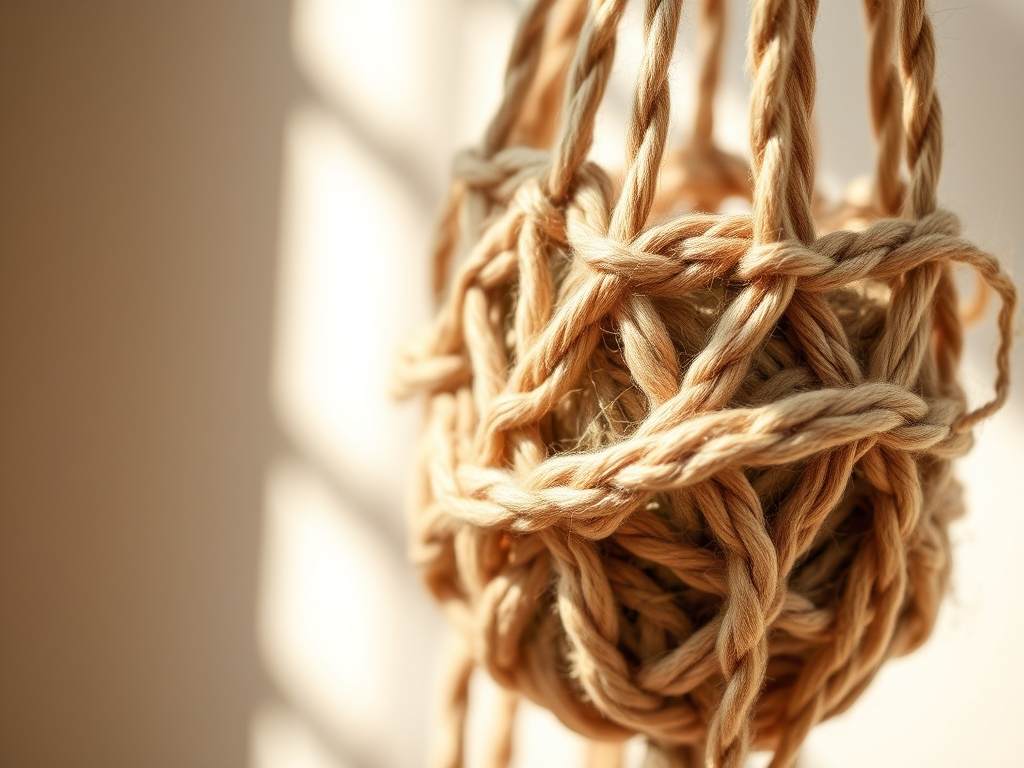
Grab your favorite shears and clear the workbench because we are diving headfirst into the tactile universe of fiber arts. When you first touch a spool of high quality cotton cord, you are not just holding string; you are feeling the result of thousands of tiny cellulose fibers twisted into a specific tensile strength. Mastering the Basics of Macrame starts with understanding how these fibers interact under tension. As you pull your first loop, the friction between the plied strands creates a structural bond that is surprisingly resilient. It is a dance of physics where gravity meets geometry. You will feel the weight of the cord, the slight grit of the natural fibers, and the satisfying snap as a knot seats into place. We are moving beyond simple craft store projects and entering the realm of architectural textile design. This is about more than just decor; it is about manipulating material density to create something that feels as solid as it looks. Let us get your hands busy and your brain buzzing with some serious fiber science.
THE STUDIO KIT
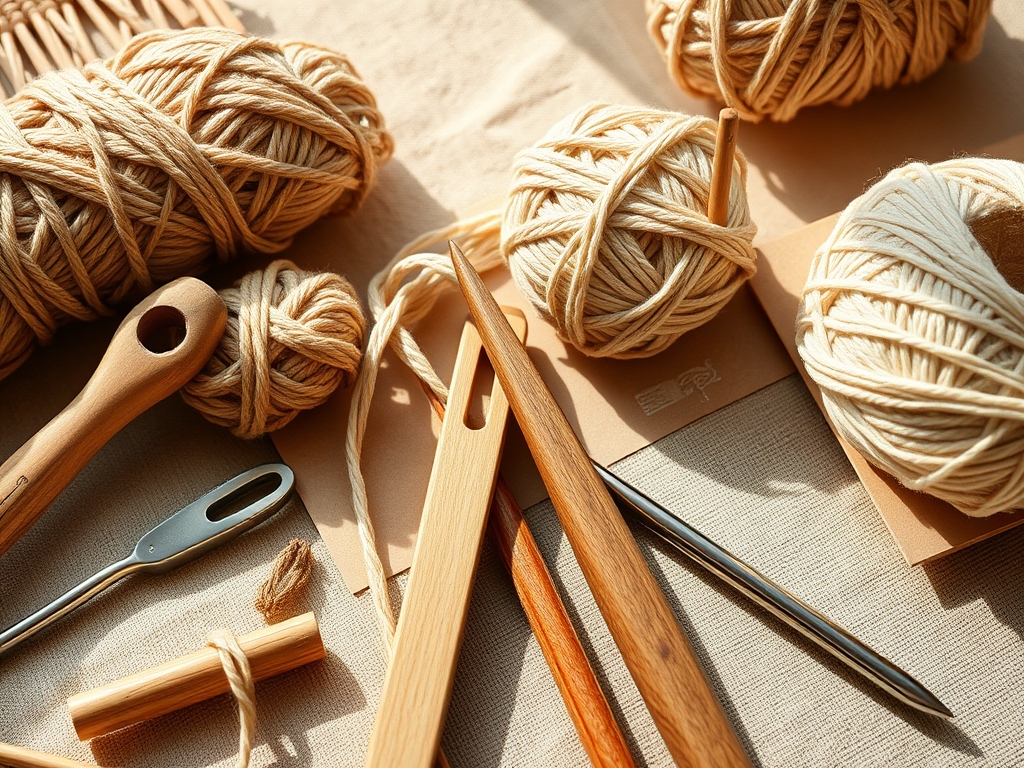
To execute these knots with precision, you need a kit that respects the gauge and porosity of your materials. Start with a 3-ply or single-twist cotton cord, ideally in a 4mm or 5mm diameter. Single-twist cord offers a softer, more velvet-like finish but has lower abrasion resistance compared to 3-ply. You will also need a sturdy mounting bar, such as a sanded wooden dowel or a copper pipe, to serve as your load-bearing anchor.
Essential tools include a pair of heavy-duty rotary cutters or fabric shears for clean, non-frayed ends. Keep a metal tailor's comb or a fine-tooth pet brush nearby to brush out fringe; this separates the individual fibers to increase the visual volume of the piece. For technical precision, use a caliper to ensure your knot spacing remains consistent across the horizontal plane.
Material Substitutions: If you cannot find high-grade cotton, look for recycled polyester cord, which offers higher UV resistance if your hanging will be in direct sunlight. For a more rugged, industrial aesthetic, jute or hemp provides incredible structural integrity due to their high lignin content, though they are much more abrasive on your skin. Always keep a bone folder or a small awl on hand to help you pick apart mistakes without damaging the fiber structure.
THE TEMPO
The "Maker's Rhythm" is a psychological state where your muscle memory takes over the repetitive motions of knotting. For a standard wall hanging, expect a three-phase timeline. Phase one is the Preparation Phase (30 minutes), where you measure and cut your cords. Remember to account for the take-up, which is the length lost as the cord bends around itself.
Phase two is the Structural Execution (2 to 4 hours), where the bulk of the knotting happens. This is where you find your flow. Phase three is the Finishing and Grooming (45 minutes), involving the final trim and the brushing of the fringe. Professional makers often use a steamer during this phase to relax the fibers and ensure the piece hangs perfectly plumb.
THE CORE METHOD
1. The Lark's Head Knot
This is your foundation. Fold your cord in half and loop the folded center over your dowel, pulling the two loose ends through the loop. This creates a secure, symmetrical attachment point.
Mastery Tip: This knot relies on surface friction. If your dowel is too slick, the knot will slide. You can increase the coefficient of friction by lightly sanding the dowel or using a matte varnish to give the wood more "tooth."
2. The Square Knot
The workhorse of the Basics of Macrame. Cross the left cord over the two center "filler" cords, then pass the right cord over the left, under the fillers, and up through the left loop. Repeat the process starting from the right side to "lock" the knot.
Mastery Tip: Pay attention to the compression force. If you pull too tight, you will distort the filler cords and cause the piece to pucker. Aim for a uniform tension that allows the fibers to breathe while maintaining a crisp, geometric shape.
3. The Spiral Stitch (Half Square Knot)
By repeating only the first half of a square knot continuously, the cord will naturally begin to rotate. This creates a DNA-like helix that adds incredible three-dimensional depth to your work.
Mastery Tip: This is a lesson in torque. As the knot spirals, the cord's internal twist will either tighten or loosen depending on the direction of your spiral. If the cord begins to unspool, you are working against the natural grain of the ply.
4. The Double Half Hitch
This is the most versatile knot for creating diagonal lines and borders. Lead one cord (the "lead") across the others and wrap each subsequent cord around it twice, pulling tight each time.
Mastery Tip: The lead cord dictates the structural path. Think of it as a rail. The tension of the wrapping cords must be lower than the tension of the lead cord to prevent the line from bowing or sagging.
5. The Gathering Knot (Wrap Knot)
Used to bundle several cords together, usually at the bottom of a piece or for a plant hanger. Take a separate short cord, form a "U" shape against the bundle, and wrap the long end tightly around the bundle and the "U." Tuck the end through the loop and pull the top string to hide the knot inside the wrap.
Mastery Tip: This knot utilizes capillary action in reverse; the tighter the wrap, the more the inner cords are compressed, creating a solid, singular mass. Use a burnishing tool to smooth down the wrap for a professional, seamless finish.
THE TECHNICAL LEDGER
Maintenance & Longevity: Over time, gravity will cause fiber creep, where the cords slowly elongate. To prevent this, ensure your knots are seated firmly. Dust your piece with a low-suction vacuum or a soft brush; never wash a macrame hanging, as the water will cause the fibers to swell and lose their structural definition.
Material Variations:
- Sustainable: Organic cotton or bamboo cord.
- Recycled: Cords made from post-consumer textile waste.
- Premium: Silk-infused cotton or metallic-flecked specialty yarns.
The Correction:
- Uneven Tension: If one side of your hanging is longer, use an awl to manually shift the slack through the knots rather than untying.
- Frayed Ends: If your cord frays prematurely, apply a tiny amount of beeswax to the tips to bind the fibers during the knotting process.
- Twisted Filler Cords: If your square knots look messy, your filler cords are likely crossing inside the knot. Use a straight pin to keep them parallel as you tighten.
Studio Organization: Store your extra cord in a cool, dry place away from direct sunlight to prevent UV degradation and color fading. Use an overhead rack to hang in-progress projects; this prevents the cords from tangling and keeps the load-bearing dowel level.
THE FINAL REVEAL
There is nothing quite like the moment you step back and see your finished wall hanging. The way the light hits the interwoven textures and the shadows fall between the knots creates a visual rhythm that is purely hypnotic. You have transformed a pile of loose string into a structured piece of art using nothing but your hands and the laws of physics. It is tactile, it is organic, and it is a total testament to your focus. Now, go find the perfect wall to showcase that masterpiece!
STUDIO QUESTIONS
What is the best cord for beginners?
A 4mm or 5mm 3-ply cotton cord is ideal. It offers a balance of soft texture and structural stability, making it easy to see your knot definition while being forgiving enough to untie if you make a mistake.
How do I calculate cord length?
Generally, multiply the desired length of your finished piece by four. If you are doing very dense knotting, multiply by six. This accounts for the take-up as the cord bends and wraps around itself during the knotting process.
Why are my knots looking lopsided?
Lopsided knots usually result from inconsistent tension. If you pull harder on one side of the square knot than the other, the knot will tilt. Practice maintaining a steady, rhythmic pull to ensure every knot has identical compression levels.
Can I use any type of wood for the dowel?
Yes, but ensure it is sanded smooth. Rough wood can snag the delicate fibers of the cotton cord, leading to pilling or fraying. Hardwoods like oak or maple provide better structural integrity for larger, heavier wall hangings.
How do I stop the cord from fraying while I work?
Wrap a small piece of masking tape around the ends of your cords. This prevents the plies from untwisting as you move them through the knots, ensuring the fiber density remains consistent from the top to the bottom.